Havana · helado
Coppelia
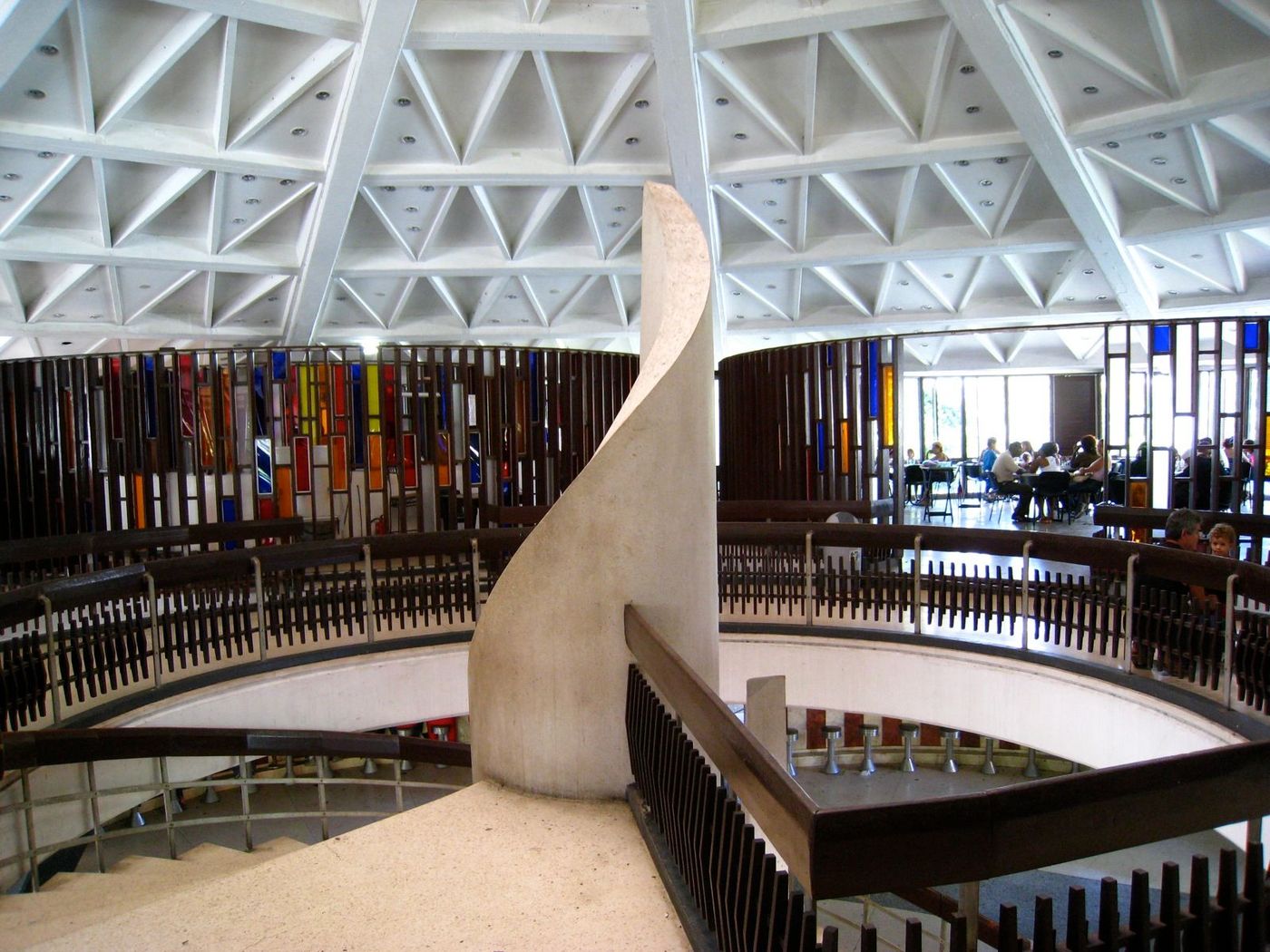
Coppelia is the record the whole Havana case rests on: an ice-cream parlour built as state ideology made edible, at a scale (a full city block, 1,200+ simultaneous customers historically) nothing else in this project approaches. Its unraveling since 2024 — repeated closures, a menu cut from 26 flavours to one, prices that have roughly tripled — is itself the most current and best-documented story about what six decades of 'ice cream as a public right' has come to.
What we know
- Commissioned personally by Fidel Castro to out-produce the American ice-cream brands Cuba had just broken with, with machinery imported from the Netherlands and Sweden and a name chosen by Celia Sánchez after her favourite ballet.
- Opened 4 June 1966 with 26 flavours and 24 combinations, in a reinforced-concrete 'spider' pavilion by architect Mario Girona spanning a full Vedado block, considered an icon of Cuban modernist architecture.
- Built and still run at genuinely enormous scale: the state director cited daily output of 1,200 ten-litre tubs in 2025, with the retail price still carrying a 60% state subsidy.
- Closed outright for three months from November 2024 for lack of milk and sugar to make ice cream at all — 'No cerró por falta de helado, sino para corregir los precios al cliente,' the director insisted on reopening, while a five-scoop salad rose from 45 to 155 pesos.
- As of the most recent dated report (28 March 2026), it had just reopened after a further three-plus-week closure selling only chocolate, the traditional 26-flavour menu now reduced to one.
- Setting of Fresa y Chocolate (1993), Cuba's only Oscar-nominated film, filmed in one of its rooms — a cultural weight the ice cream itself no longer fully carries, per its own customers.
- Status
- open
- Address
- Calle 23 (La Rampa), El Vedado, La Habana — the block bounded by 23, 21 and K per Spanish Wikipedia; the corner of 23 and L per AFP/Naiz, OnCubaNews/EFE and CubitaNOW. Not reconciled between sources.
- Opened
- 1966
- Last checked
- 2026-03-28
Something wrong here? Tell us.