Japan
Tokyo
Could experimentation and technical precision overcome tradition?
Tokyo's claim cannot be Kyoto's: this is not a city with one dominant terroir but a market of 25 Tabelog Ice-Cream and Gelato Hyakumeiten entries in 2026, more than any other prefecture in Japan, where a 1902 department-store soda fountain, a 19th-century Asakusa tea wholesaler, a Roman gelato house on its second Tokyo outpost, a patissiere's naturalist side-project and a solo craft-ice-cream maker who visited fifty farms all compete inside the same 23 wards. The clearest single case for 'experimentation overcoming tradition' is Suzukien, a tea shop trading from Asakusa since the late Edo period, whose collaboration with the Shizuoka gelato brand Nanaya turned matcha concentration into an engineering problem, selling seven graded intensities of the same leaf rather than one recipe. Shiseido Parlour's Ginza ice-cream room, restricted even to most of its own staff, shows the opposite proof: technical precision can also mean guarding a 1902 formula unchanged rather than pushing past it. HiO Ice Cream, a craft workshop a founder built after visiting more than fifty producers himself, and Giolitti Cafe's Tokyo team winning a placing at an Italian gelato competition with a hojicha flavour invented for the Japanese market, both show technique imported or self-taught being pointed at problems Kyoto's model does not raise. The honest answer the evidence supports is not that experimentation has replaced tradition in Tokyo, but that the city holds both approaches at once, competing for the same customers in wards a few stops apart.
Last checked 2026-08-21
The selected spots
3 selected
- 01
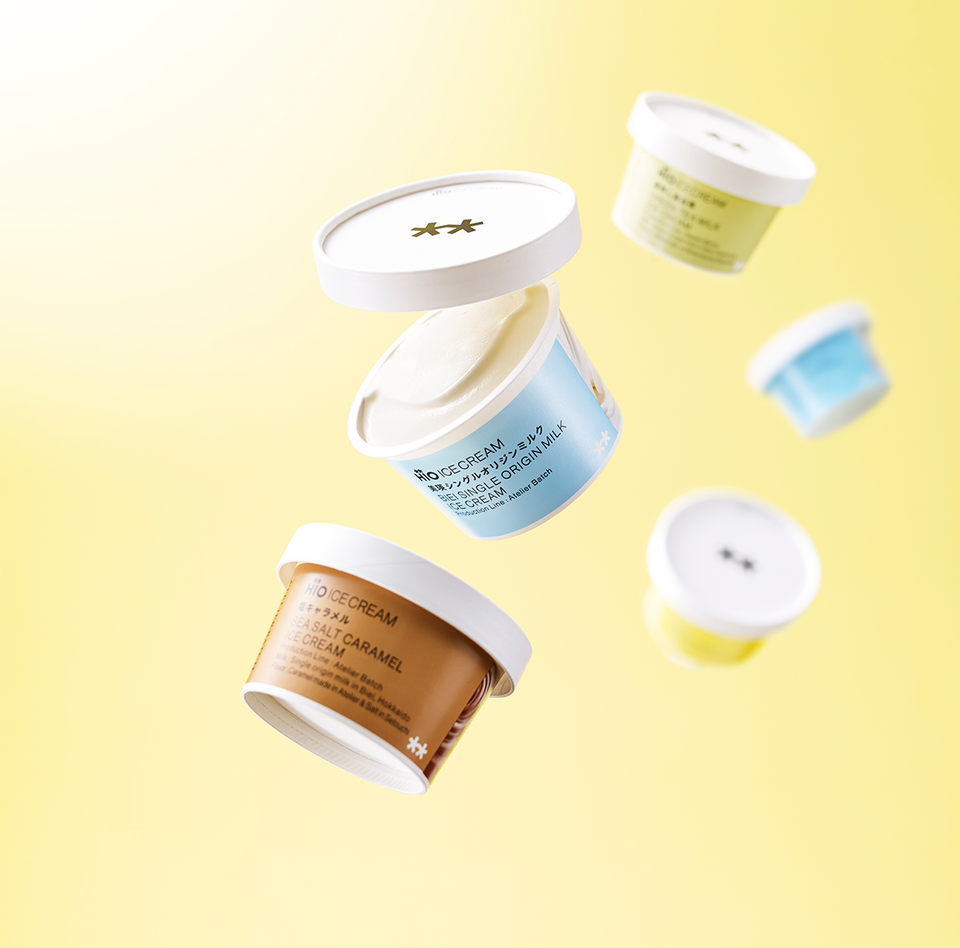
HiO ICE CREAM Atelier
ice cream · Nishio Shuhei, founder (signs the shop's own anniversary post as 'HiO ICE CREAM daihyo no Nishio')
A founder who left no discipline behind so much as invented his own: HiO began in April 2019 as a single small workshop on a residential green path in Jiyugaoka, built on Nishio Shuhei's own visits to more than fifty producers, and has since scaled from one atelier to a department-store counter and retail-chain distribution without moving its base of small-batch, glass-walled production. That trajectory from craft workshop to Nihonbashi Mitsukoshi is the scale-and-experimentation story Kyoto's specialists, by design, do not tell.
- 02
Suzukien x Nanaya
gelato
An Edo-period tea house that answers Tokyo's question about technique directly: rather than one seasonal recipe, Suzukien and Nanaya sell matcha concentration itself as a graded, numbered product line, an engineering approach to a single ingredient that has no equivalent among the Kyoto tea-adjacent candidates already published. It is also a rare case in this research of an old-city institution actively partnering with a modern specialist rather than either staying still or being replaced.
- 03
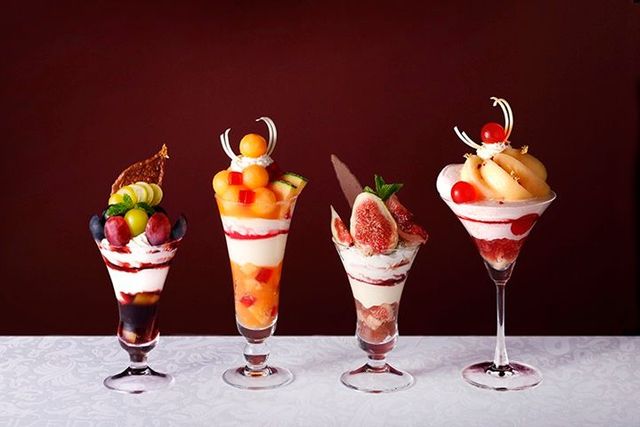
Shiseido Parlour Ginza Salon de Cafe
ice cream
Tokyo's technical-precision case does not require novelty: Shiseido Parlour is the opposite pole from Suzukien's engineered concentration scale, a business that has spent over a century treating access to its own 1902 recipe as something to restrict even internally, guarded in a room most of its own staff cannot enter. Set beside a 19th-century tea house re-engineering matcha into seven numbered intensities a few kilometres away, it makes Tokyo's argument for itself: this city holds both the guarded original and the graded experiment at once.
Research notes
City boundary
The 23 special wards of Tokyo. Places in the wider metropolis are recorded against their own locality.