Syria
Damascus
Booza was invented here. Does the place that invented it still set the standard for it?
Booza — Arabic-style, sahlab-and-mastic, hand-pounded with metre-long wooden mallets — is said to have been invented in Damascus, and the shop that carries the origin story, Bakdash in Souk al-Hamidiyah, has been pounding it in the same souk since 1895 (majority-sourced; two sources give 1885 instead). The shop reopened the day after Bashar al-Assad's government fell in December 2024, run by co-owner Samir Bakdash, who said the recipe had not changed since his great-grandfather devised it in the 1890s. Two separate health-code closures and forced reopenings are documented in 2017–2018, and four known booza factories are reported still producing 50–70 tonnes a day across Damascus at peak summer in addition to Bakdash, evidence that Bakdash is not the only maker even if it is the only one independently and repeatedly named.
Last checked 2026-08-22
The selected spots
1 selected
- 01
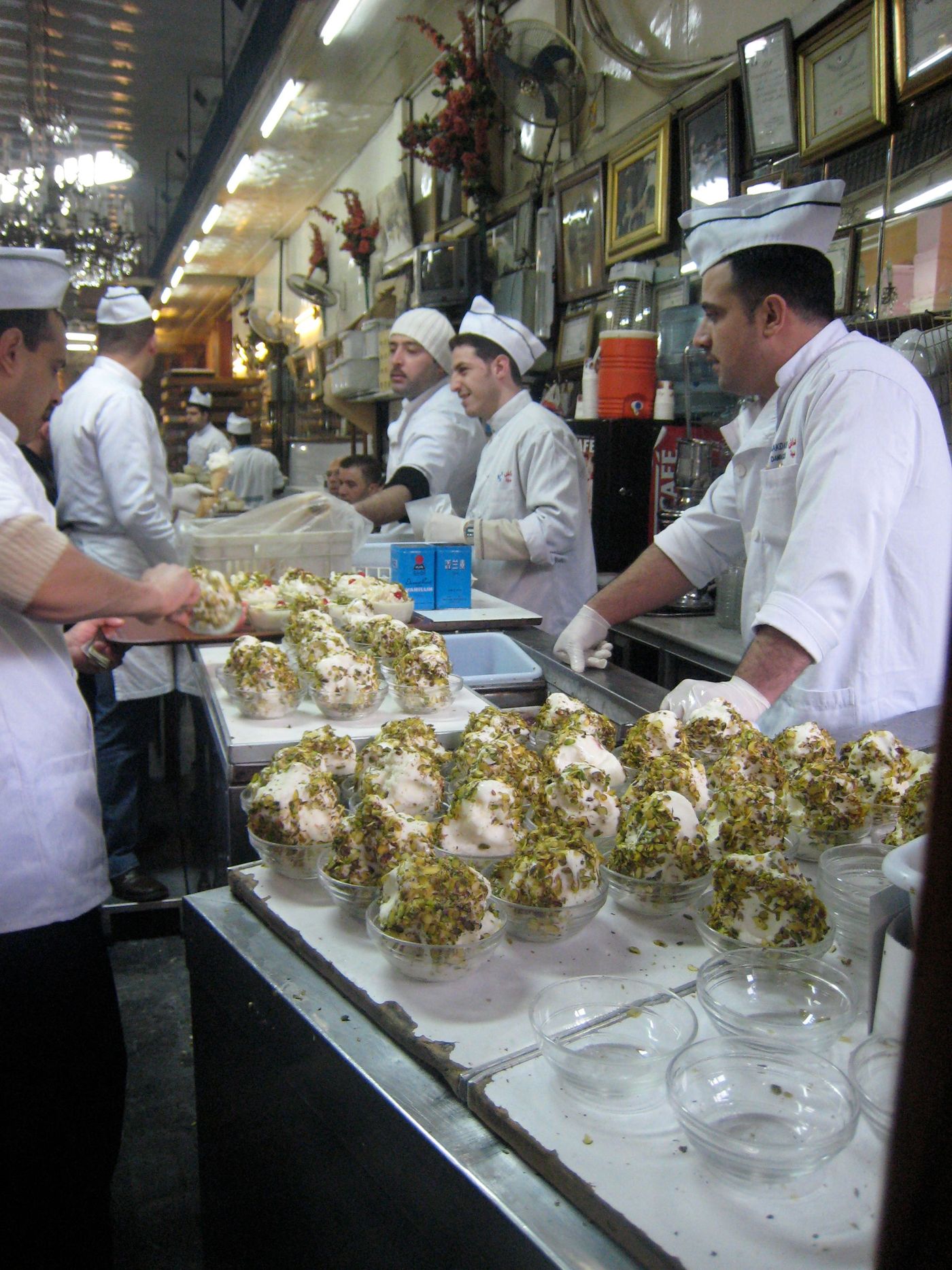
بكداش (Bakdash)
booza · Founded by Mohammad Hamdi Bakdash (محمد حمدي بكداش); run for decades by his son Mowaffaq Bakdash (موفق بكداش), who died in February 2022; co-owned at the December 2024 reopening by Samir Bakdash (سمير بكداش)
It is the shop the origin story of Arabic booza attaches to by name in every source, Arabic and English alike, and it is the only Damascus shop in this guide with a dated, named-byline account of still operating after the government that ruled Syria for the shop's entire modern history fell. Two independently reported forced closures on health grounds, both followed by reopening rather than by sale, point to a family determined to keep the shop rather than cash out.
Research notes
City boundary
The city of Damascus, including the walled old city and the Hamidiyah souk.